Navigating the Resale Market vs. New Launch Condominiums: A Strategic Entry Blueprint for Singapore Property Buyers

When entering Singapore’s private residential market, one of the primary decisions facing buyers and property investors is choosing between a newly launched uncompleted development (Building Under Construction or BUC) and an established resale property. Both options offer distinct financial structures, tax considerations, and capital appreciation trajectories within the Core Central Region (CCR) and Rest of Central Region (RCR).
Understanding how construction progression, payment schemes, maintenance cycles, and immediate rental yields influence long-term asset performance allows buyers to choose the entry pathway that best aligns with their risk tolerance and financial strategy.
The Financial Framework: Progressive Payment Schemes vs. Upfront Outlay
The capital requirements for acquiring a newly launched private condominium differ significantly from purchasing a completed resale property.
1. Progressive Payment Structure for New Launches
Acquiring a new launch allows buyers to leverage the Progressive Payment Scheme (PPS). Under this regulatory schedule, housing loan disbursements and monthly mortgage repayments scale up gradually in tandem with physical construction milestones—such as foundation completion, reinforced concrete framework erection, and brick wall installation.
For investors and upgraders, this gradual cash flow outlay reduces immediate holding costs during the initial construction phase, making capital deployment more manageable while lock-in periods run their course.
2. Upfront Capital Deployment for Resale Properties
In contrast, purchasing a resale property requires immediate, full capital deployment. The buyer must service the full mortgage loan and monthly interest payments immediately upon completion of the property purchase (typically within eight to twelve weeks of exercising the Option to Purchase).
However, resale assets offer immediate operational utility: owner-occupiers can move in right away, while investors can generate rental income immediately to offset mortgage obligations.
Micro-Location Considerations: Evaluating Modern Specifications against Immediate Supply
Choosing between a new launch and a resale property involves balancing architectural modernism and layout efficiency against immediate location advantages.
1. Architectural Innovation and Efficient Floor Plans
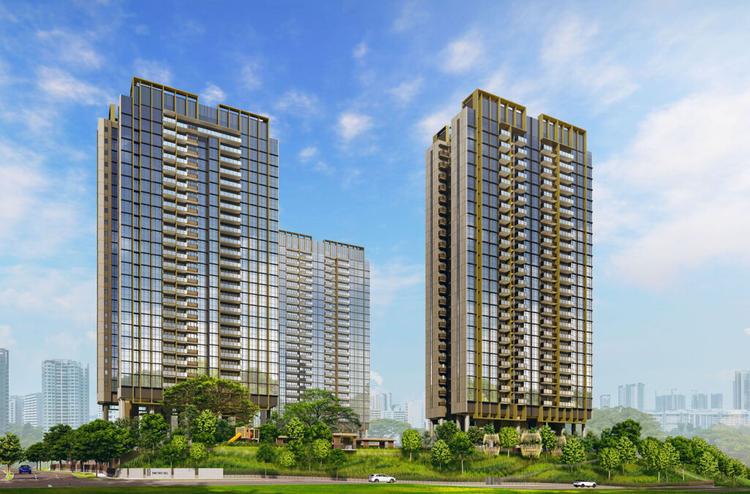
Modern new launch developments incorporate the latest building materials, energy-efficient appliances, biophilic greenery, and smart home automation systems. Floor plans in newer projects are engineered to minimize unused space, such as long hallways or oversized utility balconies, delivering maximum functional square footage per dollar spent.
For buyers seeking low-density boutique residential options with modern finishes, low unit counts, and tranquil surrounding greenery in established enclaves, developments like Amberwood at Holland demonstrate how contemporary architectural design optimizes space, privacy, and long-term capital stability in District 10.
2. Immediate Urban Accessibility and Established Infrastructure
Resale properties are often located in mature neighborhoods where surrounding amenities, transit lines, and school zones are fully operational. However, buyers must account for potential renovation costs, aging common facilities, and higher monthly maintenance fees associated with older developments.
Investors analyzing suburban growth corridors, direct transit links, and high rental demand pools often review newly launched or recently completed projects such as Lucerne Grand, assessing floor plan usability, transport connectivity, and developer track records to ensure sustainable long-term yields.
Practical Selection Criteria: Key Factors to Audit Before Purchase
To ensure an acquisition delivers long-term capital protection, buyers should evaluate properties using three core benchmarks:
- Holding Cost Buffer: Calculate the difference between servicing a progressive payment loan versus an immediate full mortgage to determine which option aligns with your cash flow strategy.
- Lease Decay and Age Risk: Ensure that older resale properties have sufficient remaining lease tenure to prevent valuation drops when selling on the secondary market in 10 to 15 years.
- Defect Liability Period: New launch properties include a mandatory 12-month Defect Liability Period (DLP) provided by the developer, covering structural or fitting repairs at zero cost to the owner. Resale buyers must absorb all repair and maintenance costs upfront.
Investor Tip: When deciding between a uncompleted new launch and an existing resale unit, evaluate your holding timeline. If you require immediate rental income or housing, resale is the practical choice. If you want to lock in a property at launch pricing while pacing your cash flow, a uncompleted new launch offers structural financial advantages.
Strategic Summary for Homebuyers
Navigating Singapore’s private property market requires selecting an entry method that balances immediate cash flow needs with long-term capital growth targets. By weighing the progressive payment flexibility of new launches against the immediate rental yields of resale properties, buyers can make informed decisions that support their long-term real estate goals.